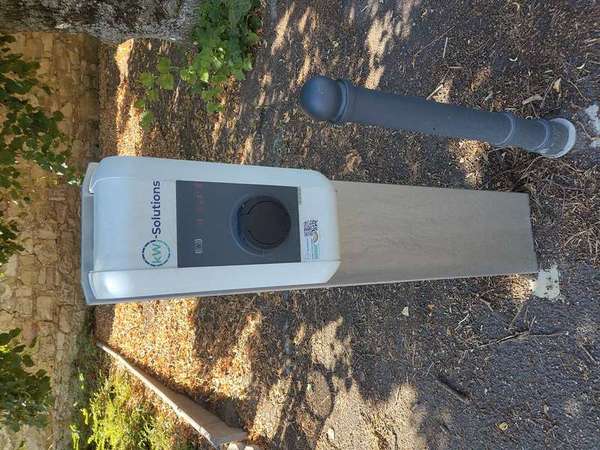
Who We Install Charging For
Workplaces & Offices
Employee charging is a hiring and retention amenity. We install banks of Level 2 stations in employee lots, with options for access control so only staff use them.
Apartments, Condos & HOAs
Multi-unit properties need shared charging with fair billing. We wire pedestal or wall stations for common parking areas and set up the metering backbone your billing provider or association uses.
Retail, Hospitality & Fleets
Customer-facing chargers keep shoppers on site longer; fleet depots need overnight charging for vans and work trucks. We engineer both, including service upgrades when the loads demand it.
What Makes a Commercial Install Different
A commercial charging project is an electrical infrastructure project, not a bigger version of a home charger. These are the decisions we work through with property owners and managers:
Load Planning & Service Capacity
Six 40-amp chargers running at once is a serious load. We evaluate your building's electrical service, run the numbers, and tell you whether the existing service handles the plan — or whether a service upgrade or staged rollout is the honest path.
Load Management
Networked chargers can share a fixed amount of power, throttling each station so the building's service is never overloaded. This often lets you install more stations on the service you already have — a major cost saver versus upsizing transformers and switchgear.
Metering & Billing
Someone pays for the electricity. Options range from chargers with built-in payment processing, to sub-metered circuits billed back through the association or landlord, to free amenity charging. We install whatever metering and data wiring your chosen billing approach requires.
Site Layout & Civil Work
Stations need to be where cars actually park: trenching across lots, concrete pedestal bases, bollards for protection, signage, and lighting. We coordinate the electrical scope and flag the civil pieces your paving contractor handles.
Permits & Utility Coordination
Commercial EV projects in St. Lucie County involve electrical permits, and larger ones may need utility review with Florida Power & Light. We handle the permit filings and inspection scheduling, and we coordinate with the utility where required.
Accessibility & Safety
Shared charging areas should be usable by everyone and safe at night: proper lighting, clear striping, and equipment placement that keeps cords out of walkways. We lay out station positions with these practical concerns in mind.
Planning Your Project: A Practical Checklist
- How many stations, and when? Start with current demand plus room to grow — installing conduit for future stations during the first project costs a fraction of a second trenching job later.
- Who pays for the power? Decide the billing model before equipment is chosen; free-amenity, subscription, and pay-per-session models need different hardware.
- Where does the power come from? The nearest electrical room or service determines trenching distance and cost. We map the shortest practical route during the site evaluation.
- Who maintains it? Chargers are outdoor electronics in a Florida climate. We recommend a maintenance plan conversation — whether with us or your equipment provider — before the first station goes live.
- What does the timeline look like? Straightforward two-to-four station projects typically move from evaluation to inspection in weeks, not months. Larger service upgrades and utility coordination extend that — we give you a realistic schedule up front.
Typical Project Shapes
| Property type | Common setup | Key consideration |
|---|---|---|
| Small office (10–30 staff) | 2–4 shared Level 2 stations | Load sharing on existing service |
| Apartment / condo community | 4–10 stations, pedestal or wall | Metering and resident billing |
| Retail / restaurant | 2–6 customer stations near entrance | Visibility, lighting, and turnover |
| Fleet depot | Dedicated stations per vehicle | Overnight load profile, service capacity |
Treasure Coast Commercial Notes
- New commercial growth in Port St. Lucie means many properties are planning charging during construction or renovation — the cheapest time to run conduit is before the lot is paved.
- HOA-governed communities should align the project with association rules on common-area electrical work and billing before equipment is ordered; we provide the permit and specification documents boards typically ask to review.
- Hurricane season and storm surge zones near the coast argue for elevated equipment mounting and proper drainage around pedestals — outdoor electronics last longer when they're not sitting in water.
- Insurance documentation: permitted, inspected commercial EV infrastructure is documented electrical work, which keeps property insurers and lenders satisfied.
Commercial EV Charging FAQs
How do we decide how many charging stations to install?
Start from demand: employee or resident EV counts today, plus growth over the next few years. A site evaluation maps your parking layout and electrical capacity, and we recommend a station count — plus conduit for expansion — that fits both your budget and your service.
Can we bill drivers for the electricity they use?
Yes. Networked charging stations can process payments or track usage per driver, and sub-metered circuits let an association or landlord bill usage back. We install the electrical and data infrastructure your billing method needs; the billing platform itself is your choice of provider.
What is load management, and do we need it?
Load management lets multiple chargers share a fixed power budget — when several cars plug in, each station automatically throttles so the building's electrical service is never exceeded. It's the standard way to put more stations on an existing service without a costly upgrade, and we recommend it for nearly every multi-station project.
Will our building's electrical service handle EV chargers?
Sometimes yes, sometimes no — it depends on the service size, existing loads, and station count. We evaluate the service during the site visit and give you the straight answer, including what an upgrade would involve if one is needed.
Who handles permits and inspections?
We do. Commercial EV projects require electrical permits through the city or county, and we file them, coordinate inspections, and work with Florida Power & Light when utility review is required.
Can stations be restricted to employees or residents?
Yes — access control options include RFID cards, mobile apps, and gated scheduling through networked chargers. We wire the stations and data connections; access policies are configured in the charging network software.
What maintenance do charging stations need?
Outdoor stations in Florida benefit from periodic inspection: connector condition, cable wear, pedestal integrity, and firmware updates on networked units. We can perform electrical maintenance on the circuits and equipment we install.
Do you work with property managers and general contractors?
Yes. We regularly coordinate with property managers, HOAs, and GCs on commercial electrical work — providing schedules, submittals, and documentation that fit into a larger project timeline.
Charging Problems Treasure Coast Property Owners Call Us About
Commercial charging projects usually start with a practical problem, not a grand plan. If any of these sound familiar, a site evaluation is the right first step:
- Tenants, employees, or customers keep asking where they can charge — and your property has no answer yet
- An existing charging station is down, faulting, or physically damaged, and nobody owns the problem
- You're unsure whether your building's electrical service can support charging without an expensive upgrade
- A renovation, build-out, or parking-lot project is already planned, and you want charging handled as part of it rather than bolted on later
- Your HOA or multi-family community wants shared charging, but working out access and cost-sharing feels complicated
Florida Electrical and Fire Alarm LLC plans the electrical side properly — load studies, panel and service capacity, permits, and installation — and walks you through options like metering and access control in plain language. Call (561) 552-3753 to schedule a site evaluation.
Service Areas
- Port St. Lucie
- Fort Pierce
- Stuart
- Jensen Beach
- Palm City
Florida Electrical and Fire Alarm LLC
Licensed electrical contractor for commercial EV charging infrastructure across the Treasure Coast — workplaces, multi-unit properties, retail, and fleets.
- Phone
- (561) 552-3753
- services.floridaelectrical@gmail.com
- License
- Florida Electrical License #ER13016161
- Hours
- Monday–Saturday 8 a.m.–5 p.m.; 24/7 emergency service
- Service area
- Port St. Lucie, Fort Pierce, Stuart, Jensen Beach, Palm City (service-area business — no public office address)
Request a Site Evaluation
Tell us about the property, the parking layout, and how many stations you're considering. We'll schedule a site evaluation and scope the project.